Long, sparse stems? Learn why houseplants stretch for light and how better lighting, careful pruning and healthy cuttings can encourage fuller new growth.
Informational Purposes Only
The content published on this blog — including plant care advice, disease identification, treatment recommendations, and lighting or fertilizer guidance — is intended for general informational and educational purposes only. It is not a substitute for advice from a qualified horticulturist, botanist, or plant care professional.
Some articles may incorporate AI-assisted analysis. While every effort is made to ensure accuracy, Botanical Wiz makes no warranties regarding the completeness or suitability of any information for your specific plant or environment. Always use your own judgment, and consult a plant specialist when in doubt. Botanical Wiz is not liable for any loss or damage arising from reliance on content found on this site. See our full Terms of Use and Privacy Policy.
Prepared with Penny, an AI writing assistant, and edited for Botanical Wiz. Care information is educational; plant needs vary.

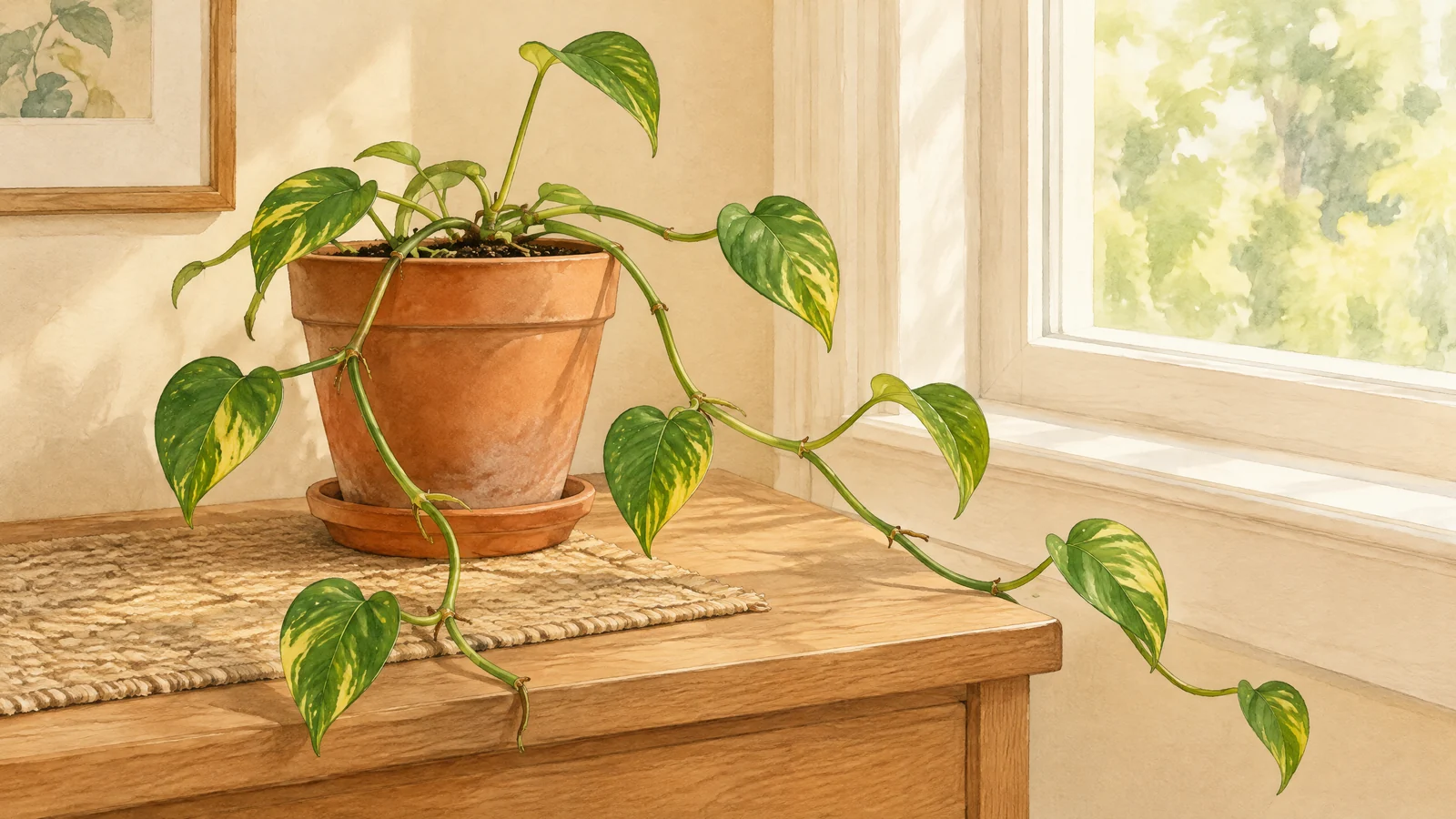
A leggy pothos near a bright window, with long bare sections between leaves.
Your plant is growing tall and skinny, with leaves spaced farther apart than they used to be. The good news: you can often make its next growth fuller. The part that has already stretched will not shrink back, so the fix is to improve its growing conditions and decide what to do with those long stems.
The images in this article are AI-generated illustrations for explanation, not Paula’s real plant photos. Actual plants and growth patterns vary.
How to recognize leggy growth
Leggy growth usually looks different from your plant’s normal shape. Look for a combination of these signs:
- Long gaps between leaves: The bare sections of stem, called internodes, are noticeably longer than before.
- Small new leaves: Fresh leaves may be smaller or less developed than older ones.
- Thin, weak stems: Stems may struggle to hold themselves upright.
- Leaning or reaching: New growth bends toward a window or another light source.
- Fading variegation: Variegated leaves may develop less contrast or more green as the plant tries to make the most of available light.
A tall stem does not automatically mean something is wrong. Some plants naturally climb, and trailing vines are meant to grow long. Pothos or tradescantia can look lovely cascading from a shelf, even when they have lengthy stems. Pay attention to the pattern: long vines with healthy leaves may be normal, while bare stretches, weak growth, or a sudden change in leaf size can signal that the plant needs attention.
Also consider whether the plant is simply leaning under its own weight. A leafy stem that is otherwise strong and evenly covered may just need support. A stake can help it stand upright, but it will not make widely spaced leaves grow closer together.
Why is my plant growing tall and skinny?
The most common reason is that the plant wants more light. When light is limited, a plant may stretch its stems toward a brighter area. This response is called etiolation. Put simply, the plant is reaching for light, often at the cost of compact, sturdy growth. University of Maryland Extension’s guide to lighting indoor plants explains how insufficient light can contribute to weak, stretched growth.
Plants can also compete for light when they crowd each other on a shelf or share a spot with taller foliage. A plant may lean toward a nearby window or stretch above neighboring leaves to reach a brighter patch.
Stretching is not the only possible cause of a plant looking unwell. Yellowing leaves, drooping, or slow growth can have other explanations, too. If you suspect watering may be a factor, see our guide to common houseplant watering mistakes.
How to fix leggy plants
Start with the growing conditions, then choose whether to keep, prune, or propagate the long stems. Pruning without changing the conditions that caused the stretching can lead to more leggy growth.
1. Move it closer to better light
Place the plant where it gets brighter light suited to its needs. For many houseplants, that means moving closer to a window with bright, indirect light. Make the change gradually, especially if the plant has been in a dim spot. A sudden move into strong direct sun can scorch leaves.
For another practical overview, see our lighting guide for houseplants. To explore where plants might fit in your home, BotanicalWiz Room Analysis matches plant recommendations and placement spots to a room photo.
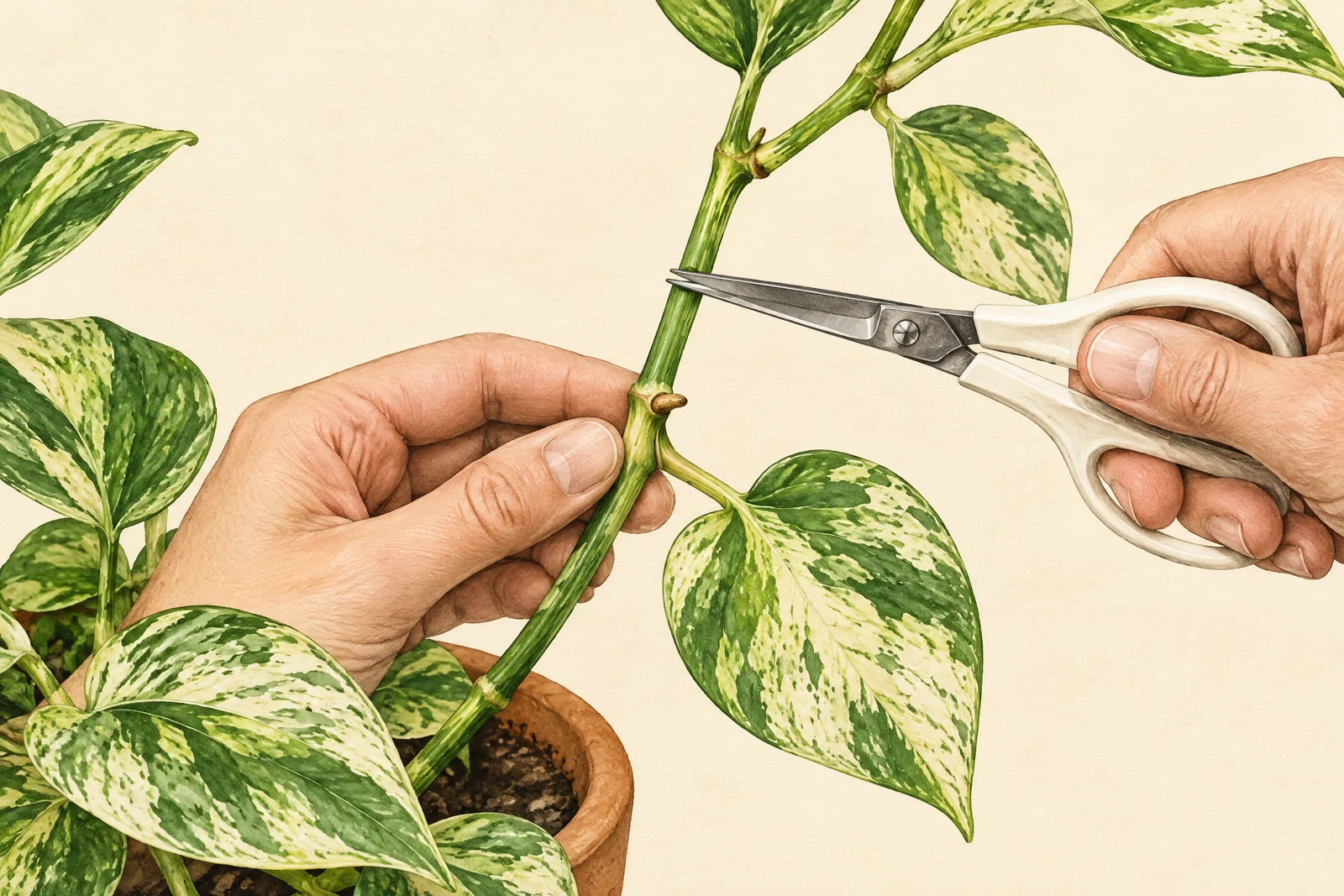
A pothos stem being pruned just above a leaf node.
2. Rotate or pinch as new growth appears
If your plant is growing toward one side, turn its pot a little every week or two so different sides face the light. Rotate only when it suits the plant and location; the goal is more balanced growth, not constant repositioning.
For plants that branch after their growing tips are removed, pinching can encourage a bushier shape. Use clean fingers or scissors to remove the soft tip of an actively growing stem just above a leaf node, the point where a leaf joins the stem. This works best while the plant is actively growing. Check your plant’s needs first, since not all plants respond the same way to pinching.
3. Prune back long, bare stems
You can prune a leggy plant more firmly if it is healthy and has healthy growth below the cut. Use clean, sharp scissors and cut the remaining parent stem just above a leaf node. That node may produce new growth, often creating shoots below the cut. The removed part of the stem will not fill in, and the old gaps between leaves will remain if you leave that section in place.
How much you can remove depends on the plant and how much healthy growth it has. Avoid cutting a stressed plant back so severely that it has too little healthy foliage to recover. If you are unsure, trim one or two stems first and see how the plant responds. Not every plant branches in the same way; for example, palms generally do not produce new side shoots from a cut stem, so do not apply a universal chop-and-branch rule to them.
4. Take cuttings and make the pot fuller
Long stems do not have to go to waste. Many pothos and tradescantia can be propagated from stem cuttings. For a rooting cutting, make its lower cut just below a healthy node so that node stays on the cutting. Use healthy stem sections that include viable nodes, then remove any leaves that would sit below the water or soil line. This is different from pruning the parent stem above a node to leave a growing point on the parent. The cutting should be placed with a node in contact with the rooting medium; a leaf alone will not root into a new plant. Keep it warm and in bright, indirect light.
For general guidance, Iowa State University Extension recommends stem-tip cuttings with multiple nodes, commonly three to six inches long, and at least one node in the rooting medium. Some plants, including pothos, can root from shorter or one-node cuttings when that node is viable, but propagation results vary by plant and technique. For a pothos-specific overview, see our pothos care guide or how to propagate plants from cuttings.
When the cuttings have grown healthy roots, you can pot them up. Planting several cuttings back into the original pot can make it look fuller. Follow a plant-specific propagation guide for the best timing and method.
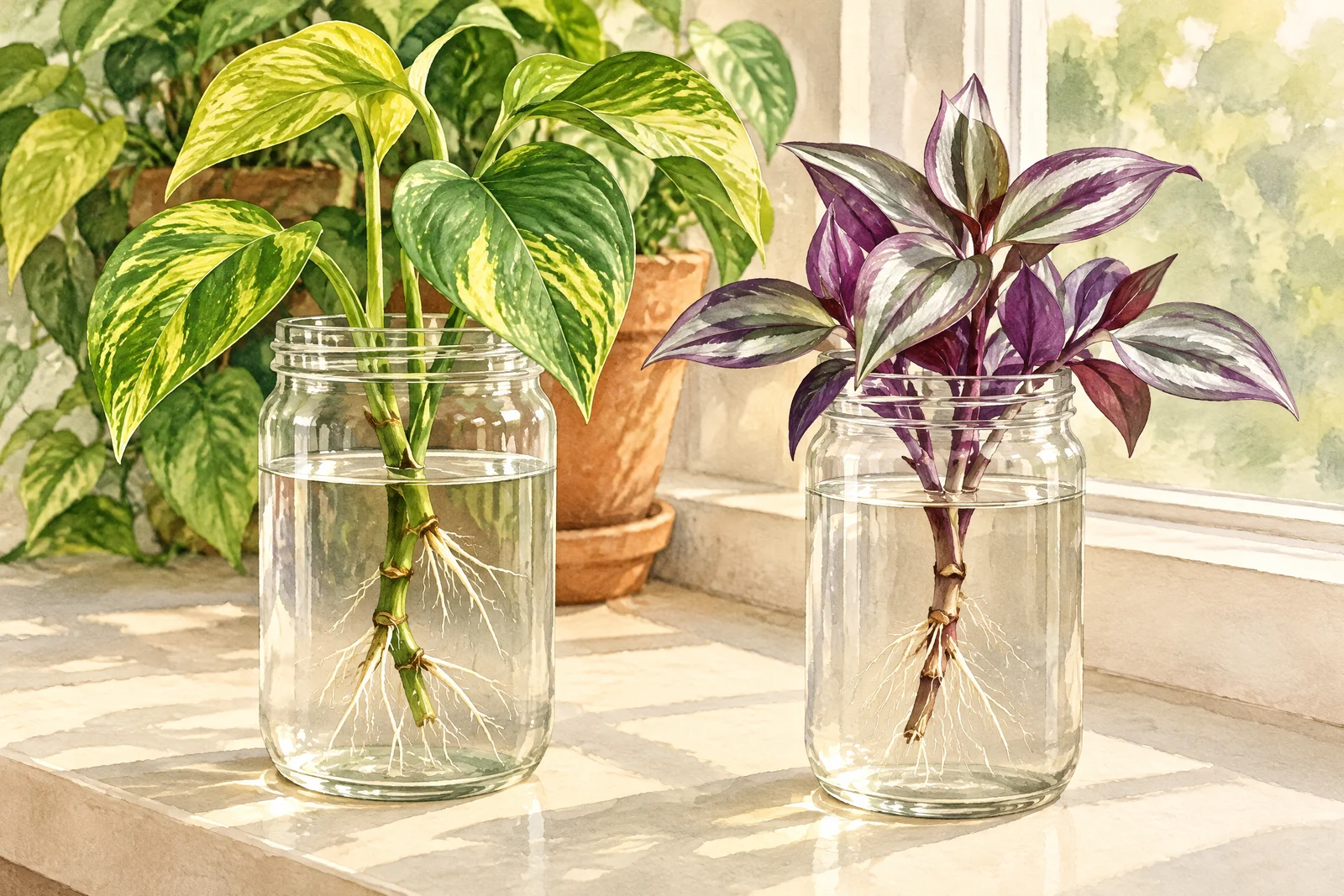
Pothos and Tradescantia zebrina cuttings rooting in water.
5. Use the height instead of fighting it
If the plant is healthy and you like its shape, support can be the easiest fix. Tie a leaning stem loosely to a stake with a soft tie. For a climbing plant, a trellis or moss pole can give the stems somewhere to go. Leave room for the stems to grow, and avoid tight ties that could damage them.
Support improves posture and makes a plant easier to manage. It does not reverse sparse growth or replace better light, so adjust the plant’s position if new stems keep stretching.
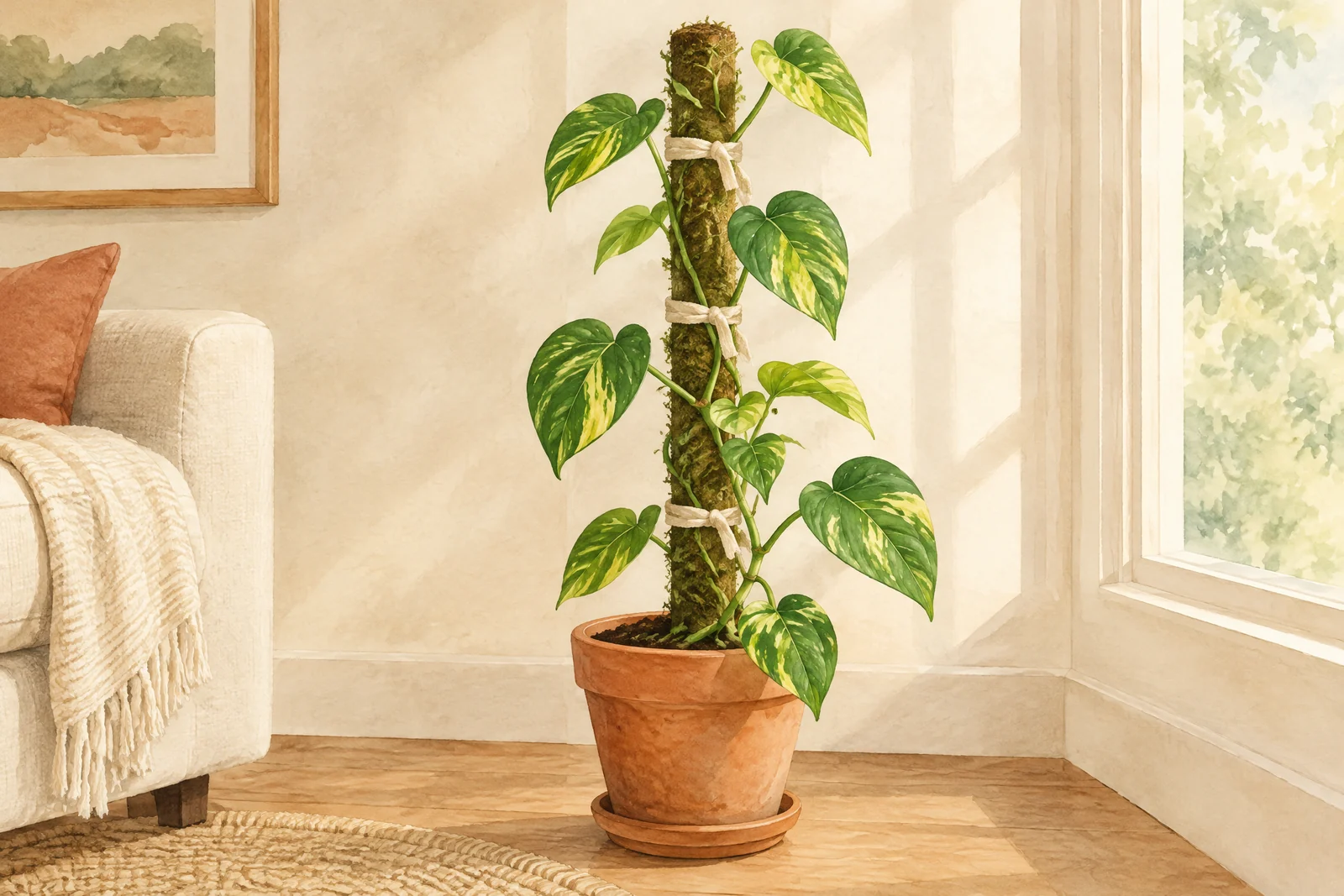
A climbing pothos supported as it grows toward a bright window.
Chop-and-prop: a fuller-plant reset
For a very sparse vine, you can combine pruning and propagation. Cut the longest bare sections into pieces with healthy nodes, root the cuttings, then plant several around the edge of the parent plant’s pot. This can create a fuller-looking plant over time, while the original plant may send out new shoots from nodes below the cuts.
If the parent plant has little healthy growth left, or you simply prefer a fresh start, keep a healthy cutting and grow that on instead. This is often more practical than trying to restore a severely bare stem. For other plant-care concerns, you can identify a plant or explore possible health issues with BotanicalWiz. Leggy stems alone do not mean a plant needs a larger pot; if its roots are crowded or it otherwise needs a larger pot as it recovers, see how to repot a plant.
The quick fix checklist
- Move the plant gradually to a brighter spot that suits its needs.
- Rotate it occasionally if it is leaning toward one side.
- Pinch growing tips or prune above a node if you want a bushier shape and the plant responds well to it.
- Root healthy cuttings with viable nodes and replant them to fill out the pot.
- Stake or trellis stems you want to keep growing tall or trailing.
The existing stem will not become compact again, but new growth can be healthier and fuller when the plant gets suitable light and care. Start with one small change, then give it time to respond.
Comments
0 comments
Sign in to join the conversation and share your plant knowledge.
Related Posts
Thanksgiving Cactus vs. Christmas Cactus: Which Is Better for Your Holiday Shelf?
Thanksgiving cactus or Christmas cactus? Compare stem shapes, bloom timing, and care tips to choose a holiday shelf plant and protect its buds.
7 Mistakes You're Making When Watering Plants (and How to Fix Them)
Avoid seven common houseplant watering mistakes with plant-specific soil checks, good drainage, and a simple routine that adjusts to your home and the seasons.

Plant Identification App? Here's What You Should Know Before You Download One
Learn what photo-based plant identification can and cannot tell you, how to take a useful plant photo, and how to check AI suggestions before acting on them.